MSA 484089 Twin Flow Airline Respirator Duo
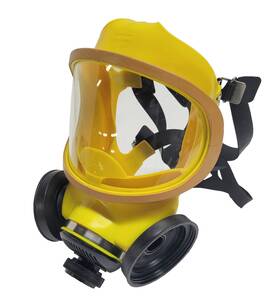
( Brand: Msa ), ( Manufacturer Part Number: 484089 ), ( Part Type: Flow ), ( Unit Type: Unit ), ( Facial Coverage: Full Face Mask ), ( Country Of Origin: United States )
Review MSA Duo twin Full Face Constant Flow Airline Respirator Large
The MSA 484089 Duo-Twin Flow Airline Respirator is a high-performance, reliable solution for those requiring a continuous air supply in hazardous environments. This respirator is designed to deliver clean, breathable air through two independent hoses, ensuring uninterrupted airflow even if one hose is obstructed or damaged.
The Duo-Twin respirator is engineered with a rugged, yet lightweight design, featuring a durable, impact-resistant polycarbonate facepiece. The facepiece is equipped with a clear, scratch-resistant visor that provides an expansive field of view, enhancing situational awareness and reducing eye fatigue.
The respirator's air delivery system includes a twin-flow, demand-type, positive-pressure blower that ensures a consistent airflow rate of up to 100 liters per minute. The blower's compact size and low-maintenance design make it ideal for use in tight spaces and demanding applications.
The MSA 484089 Duo-Twin Flow Airline Respirator is compatible with a wide range of MSA mask cartridges and filters, allowing users to customize their respiratory protection to suit their specific hazardous environment needs. The respirator also features a quick-connect system, enabling easy and efficient hose swapping and maintenance.
Additionally, the Duo-Twin respirator includes a number of user-friendly features, such as a comfortable, adjustable head harness, a built-in speech diaphragm for clear communication, and a low breathing resistance to reduce user fatigue. The respirator is also equipped with a pressure gauge, which indicates the air pressure supplied to the facepiece and alerts users to any potential issues.
Overall, the MSA 484089 Duo-Twin Flow Airline Respirator is a versatile and effective solution for those requiring continuous air supply in hazardous environments. Its rugged design, reliable air delivery system, and user-friendly features make it an excellent choice for a wide range of industrial, emergency response, and military applications.
The MSA 484089 Duo-Twin Flow Airline Respirator is a popular choice among professionals requiring a high level of respiratory protection. Let's examine some pros and cons to help you make an informed decision regarding this respirator.
Pros:1. Dual-flow design: The Duo-Twin technology allows for the intake of fresh air from the supply line and the exhaust of contaminated air through a separate exhaust port, ensuring a constant supply of clean air and improving overall comfort.
2. Long hose length: The long hose length (up to 30 feet) makes it ideal for applications where the air source is located at a considerable distance from the user.
3. High level of protection: The MSA 484089 Duo-Twin provides a high level of protection against various types of contaminants, including particulate matter, gases, and vapors.
4. Easy to use: The respirator is easy to put on and take off, and it features a simple control system for adjusting the airflow.
5. Durable design: The MSA 484089 Duo-Twin is built to withstand rough conditions and can be used in various industries, including construction, manufacturing, and hazardous materials handling.
Cons:1. Weight: The respirator, with its long hose and dual-flow design, may be heavier than some other respirators, potentially causing user fatigue over extended periods.
2. Cost: The MSA 484089 Duo-Twin is a more expensive option compared to some other respirators, which might be a disadvantage for budget-conscious buyers.
3. Complexity: The dual-flow design and the need for a separate exhaust port may require more setup time and maintenance compared to single-flow respirators.
In conclusion, the MSA 484089 Duo-Twin Flow Airline Respirator offers several advantages, such as high-level protection, long hose length, and ease of use. However, it also has some disadvantages, like weight, cost, and complexity. Ultimately, the decision to purchase this respirator depends on your specific needs, budget, and working conditions.
If you require a high level of respiratory protection and are willing to invest in a robust and comfortable solution, the MSA 484089 Duo-Twin Flow Airline Respirator might be a suitable choice for you. However, if you're looking for a more budget-friendly option or have limited space for hose setup, you might want to consider other respirators available in the market.
Details:
NIOSH approved: Meets standards set by the National Institute for Occupational Safety and Health. Important considerations, Ventilation: Must be used in areas with at least 19.5% oxygen. MSA 484089 Duo-Twin Full Face Constant Flow Airline Respirator Large, Good working condition Signs of normal light previous use, The is a yellow air-supplied respirator that allows users to add particulate filters or chemical cartridges for multi-contaminant protection. It is designed for use in adequately ventilated areas with at least 19.5% oxygen, ideal applications like asbestos abatement, chemical processing, and pharmaceutical work.
Positive pressure: designed to maintain a slight positive pressure inside the face piece help prevent inward leakage of contaminants. Accessories: requires a proper air source and accessories to function correctly. Features and benefits, Fresh-air supply: Provides a constant flow of air from an external source, ideal for long periods work. Switchable exhalation valve: Allows for comfortable long-term use, which is particularly beneficial abatement projects.
Combo protection: Can be used with particulate filters and/or chemical cartridges for versatility against a range of contaminants. Fit: Proper fit is crucial; it may not provide a satisfactory seal for individuals with beards or other facial hair that prevents contact between the face and sealing surface. The yellow designation often refers to the color of face piece or headgear, though product number itself is key identifier. Maintenance: Filters or cartridges must be used in conjunction with the respirator to protect against specific contaminants.
part #: 484089 price
- $90.00
specifications masrespi:
- brand: Msa
- mpn: 484089
- part type: Flow
- unit type: Unit
- facial coverage: Full Face Mask
- country of origin: United States
offer masrespi:
- availability: In Stock
- quantity: 1
- options: Ship-to-home
- best offers: True
- sold: 0
- started: December 2, 2025
seller masrespi:
- rating: 100.0%
- # reviews: 5764
- city: Sparta, Tennessee
payments masrespi:
- credit card: Visa
- wallet: Paypal
- other
general masrespi:
- condition: Used
- Personal Protective Equipment PPE > Masks Respirators > Respirator Masks
shipping masrespi:
- service: USPS Ground Advantage
- class: Standard
- type: Fixed
- carrier: USPS
- cost: $10.00
- transit: 3-8 Days
returns masrespi:
- paid by: Seller
- method: Money back
- policy: Returns Accepted
- time: 30 Days
Msa 484089 Is Similar To:
- 00817663 Msa Safety Works Respirator (40.4% similar) Brand new in package. Painting, applying pesticides, working near lead or asbestos, with ammonia, cleaning brick neuritic acid. Photos are of actual items. This set is recommended by Msa for multi-purpose. Msa safety works respirator made in USA if you are looking to do any upcoming spring projects ...(October 3rd, 2017)
- 00817664 Msa Safety Works Respirator With Replacement Cartridges (39.4% similar) Never opened. Recommended by Msa for toxic dust. Seal is still intact. Comes with 2 replacement cartridges. Meets requirements for OSHA and nosh P100 standard...(March 2nd, 2018)
- 00817665 Msa Safety Works Respirator (40.4% similar) Respirator and 2 refill cartridges brand new...(December 4th, 2017)
- 00817667 Msa Safety Works Respirator (40.4% similar) New never used, Msa safety works replacement cartridges, package seam came open but not used or damaged selling as is, free shipping in us...(October 9th, 2017)
- 030077 Msa New Optimair Mm Air Purifying Respirator With Mask Optim (37% similar) Hard to find. This was never used. Selling this for a third of the price open box to take photos. This normally retails for 995...(November 24th, 2018)
- 0543-01408 Msa Comfo Ii Respirator Small New (41.1% similar) Comes with all pictured items. New old stock brand in box. Boxes maybe be bent or torn...(June 8th, 2018)
- 10007450 Msa Safety Works Respirator 641817001264 (37.6% similar) Lot of 1 respirator Msa for pesticides asbestos painting, etc. And 1 set of replacement cartridges no reasonable offer refused...(September 20th, 2017)
- 10016756 Msa Ultra Elite Full (22.7% similar) Msa ultra elite full face piece respirator demand exhalation valve manual present in box has wear and tear product remains with protective covering on face shield medium...(May 8th, 2017)
- 10023482 Msa Safety Cable For Optimair Series Powered Respirator 641817012543 (38.6% similar) Buyer will receive the pictured item Mesopotamian 2KKIT no...(July 23rd, 2018)
- 10023483 Msa Safety Dual Rate Charger For Optimair Series Powered Respirator (44.4% similar) Many Msa products integrate a combination of electronics, mechanical systems and advanced materials to protect users against hazardous or life-threatening situations...(March 5th, 2018)
- 10028995-ea Msa Advantage 3200 Full (19.4% similar) Value-added services provider providing safety and inventory programs for improved efficiencies. The lens meets all ANSI Z87. 1 requirements including high-impact performance. Pre-set upper straps prevent snags during donning and doffing, providing a tighter, more secure seal. Their wraparound ...(December 2nd, 2017)